Key Considerations for Flat Roof Solar Installations
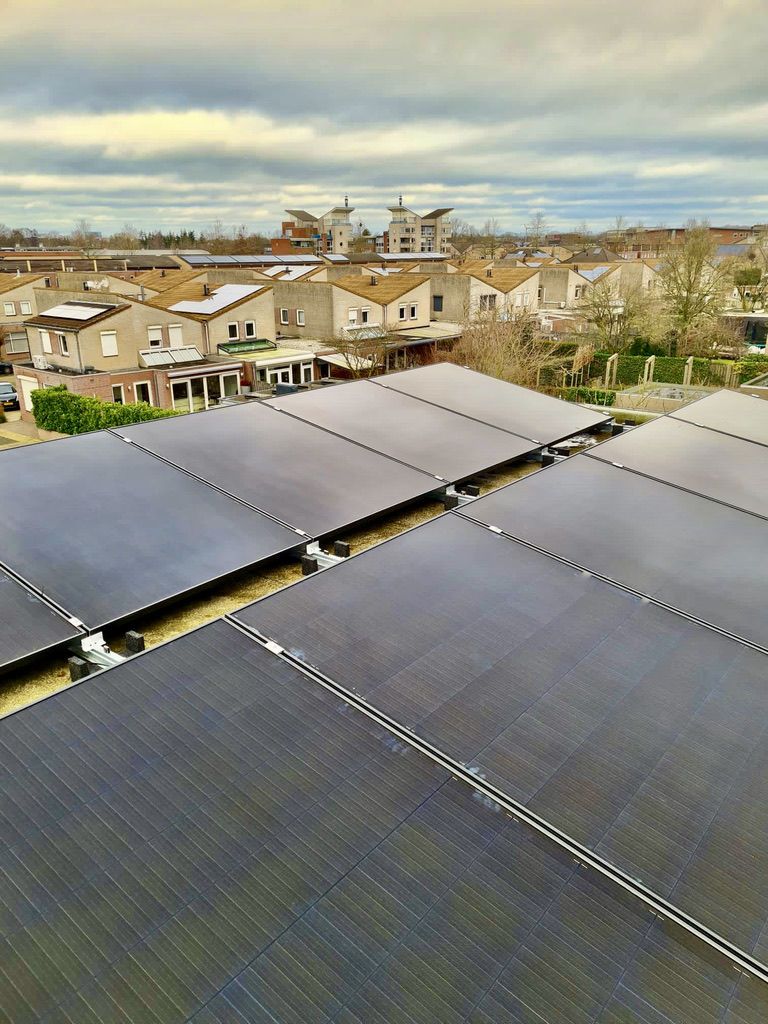
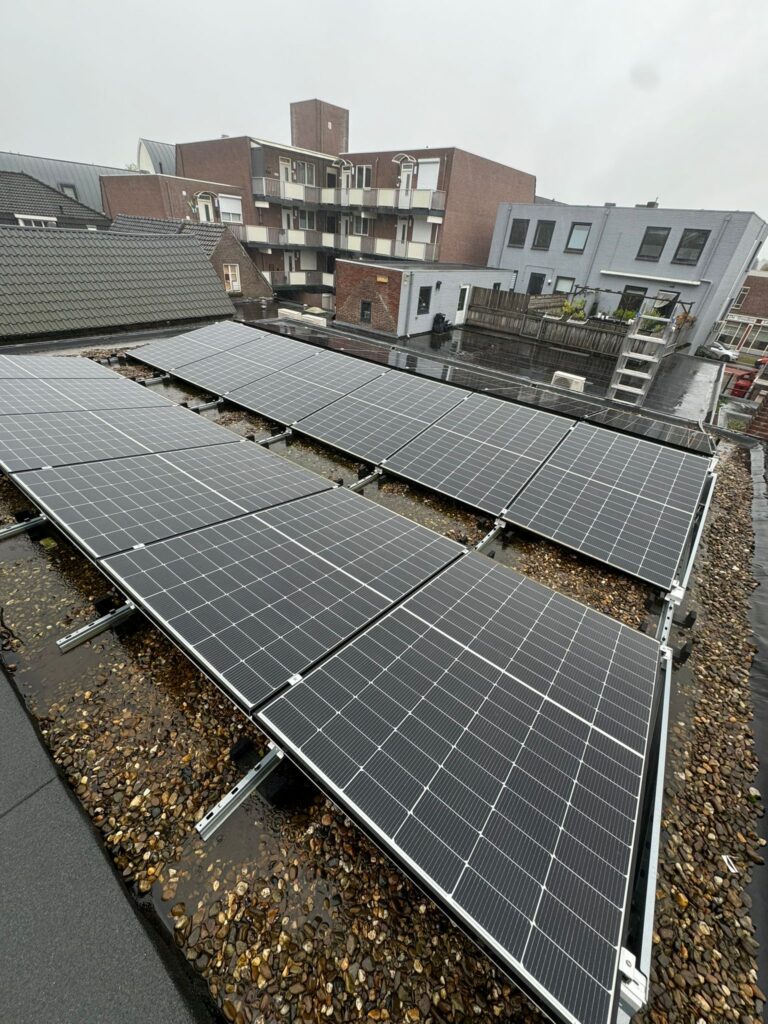
Installing solar panels on a flat roof comes with several advantages. Panels are generally less visible, so aesthetics matter less. Flat roofs also allow better cooling and offer more flexibility in panel placement. Moreover, flat roofs often allow for a better orientation than pitched roofs. However, flat roofs may have a smaller usable area and need to bear the additional weight of the mounting structure and ballast. It’s crucial that the roof is structurally sound to support this. Below, we outline the most important factors.
Mounting Solar Panels on a Flat Roof
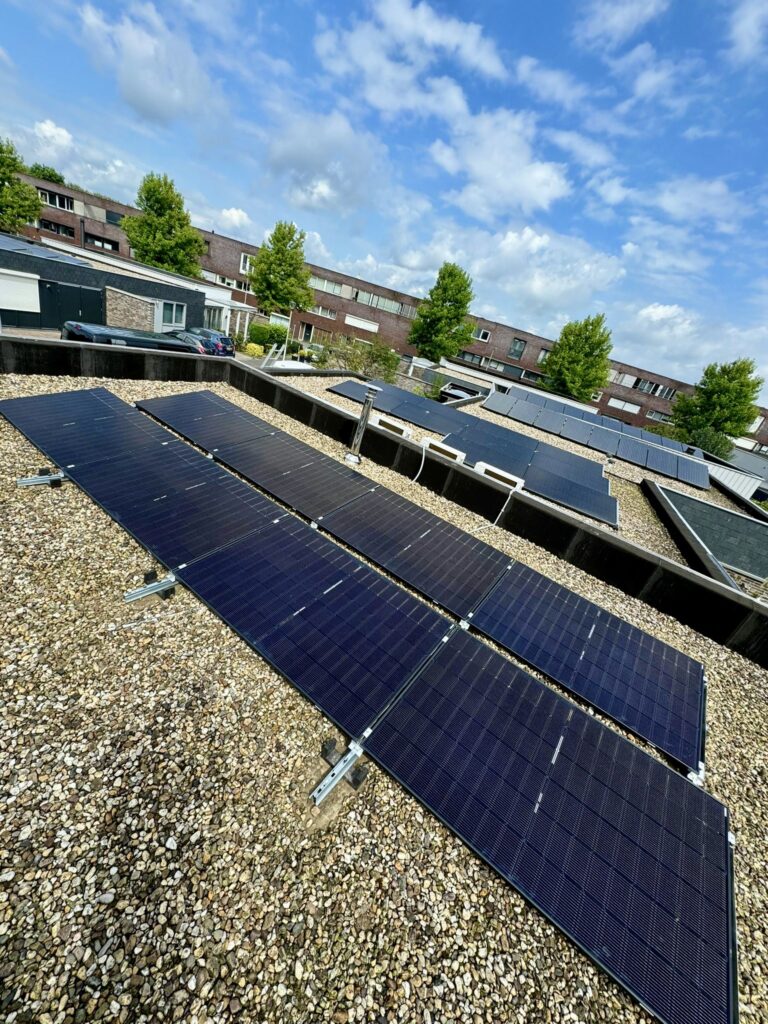
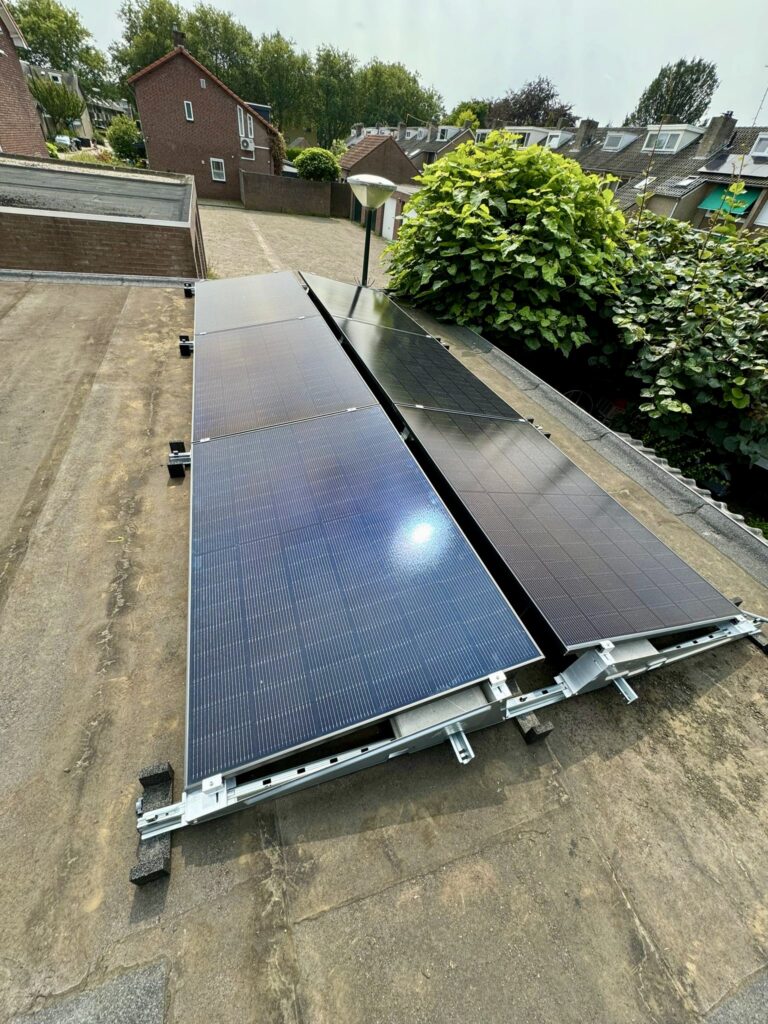
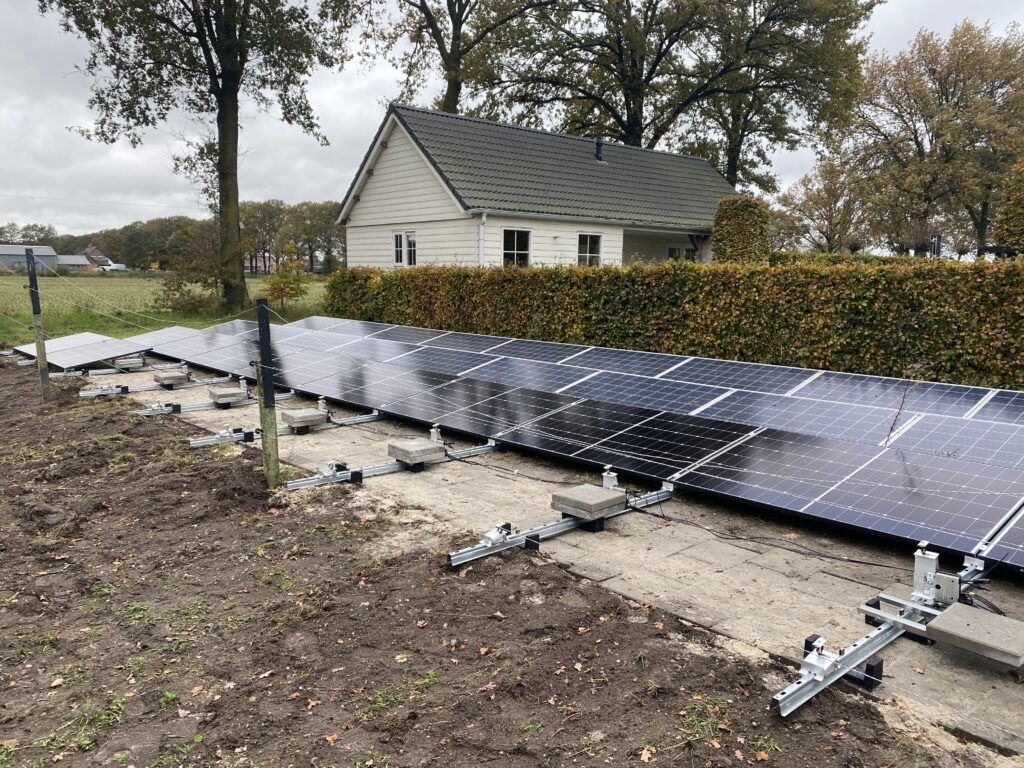
OptimaSolar installs flat roof systems from the Dutch brand Van der Valk Solar. Panels are secured using roof racks, supported by tile carriers. Foot supports fasten the panels to the racks, while ballast trays filled with weight secure the system against wind. The setup is completed with back and side plates for a neat finish.

Inclination Angle: Solar Panels on Flat Roofs
To maximize yield, panels ideally face south. A steeper tilt increases row spacing due to shadowing, requiring more roof space. OptimaSolar uses a standard 10-degree angle—ideal for drainage and preventing dirt buildup, which helps maintain performance.
Recent completed projects


Maximizing Output with Correct Pitch and Spacing
On flat roofs, panels are installed in multiple rows. The spacing between rows is determined by the tilt angle. At a 10-degree tilt, row spacing is optimized to prevent shading and allow for the maximum number of panels.
Panel Orientation Options: Flexibility with Flat Roofs
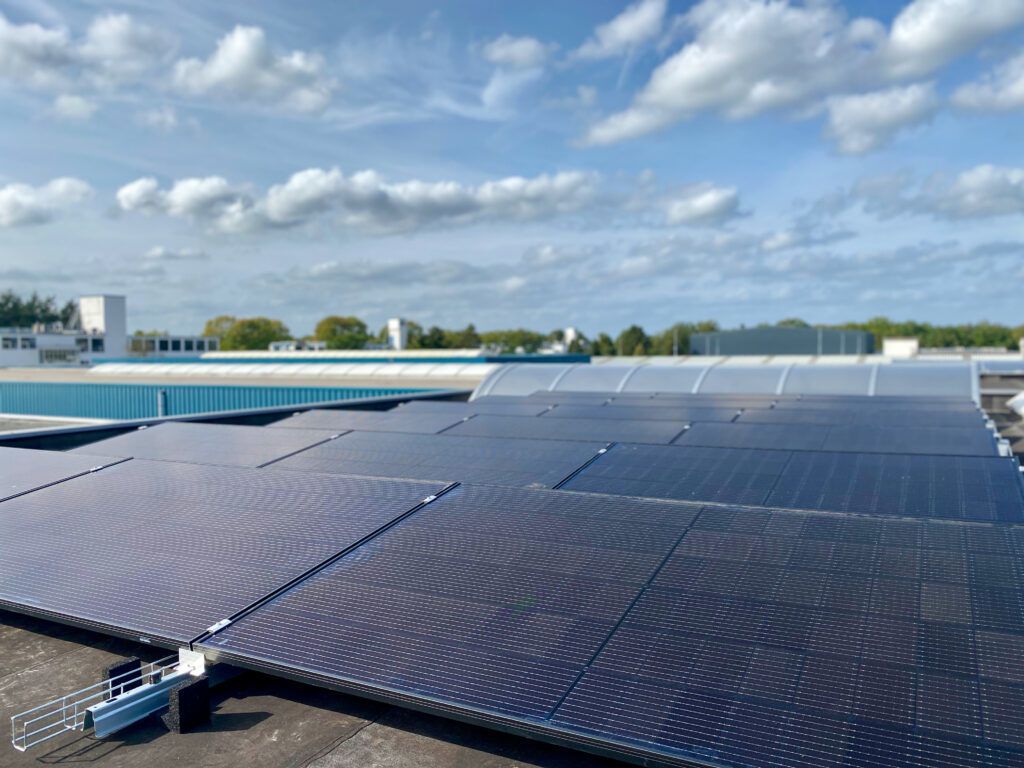
One major advantage of flat roofs is freedom of orientation. Unlike pitched roofs, where direction is fixed, flat roofs let you choose between a south-facing or east-west layout.
- South-facing systems typically produce the highest total annual yield.
- East-west configurations offer a more even energy distribution throughout the day, which can increase self-consumption—especially important in the future when feed-in tariffs may decline.
Panel Layout: Landscape or Portrait
Panels can be installed in landscape (horizontal) or portrait (vertical) layout. This affects both the look and the required mounting hardware.
- Portrait setups require taller support legs to maintain proper tilt.
- Landscape systems use shorter legs and typically fit more panels per square meter.
- In east-west configurations, either layout is possible—though landscape is most commonly used due to space efficiency.
Aesthetics: Black Mounting Frames Available
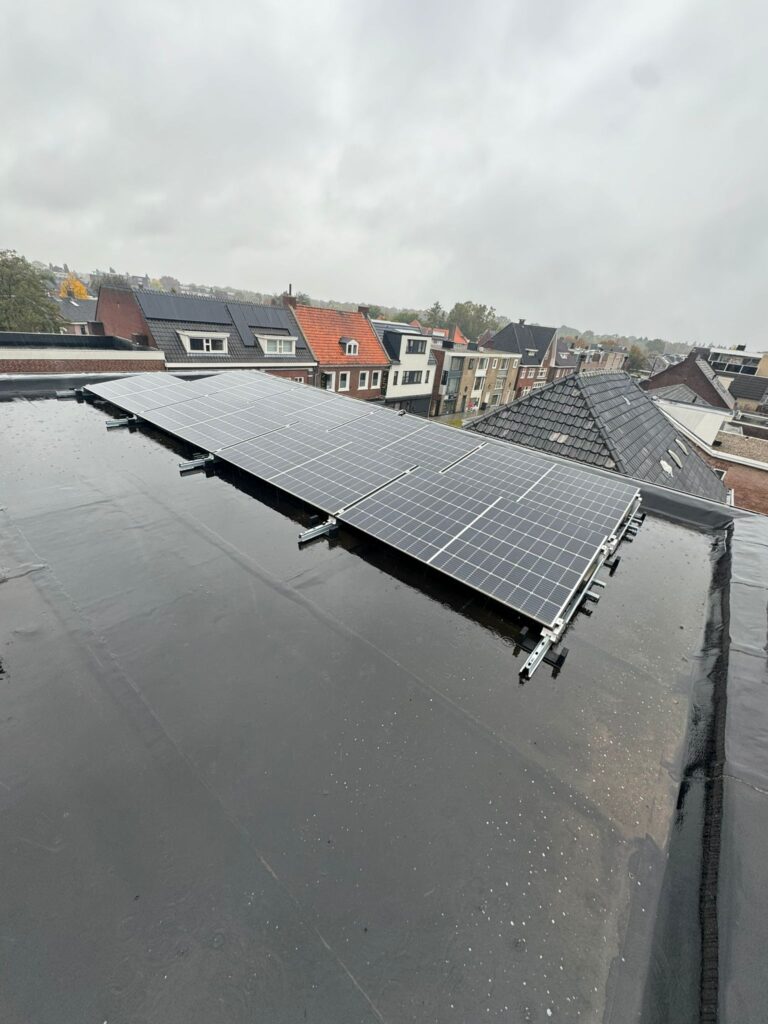
When the mounting system is visible from the ground or nearby windows, aesthetics can be improved with black components. OptimaSolar offers:
- Black back and side plates
- Black end caps on panel clamps
These pair perfectly with full black panels for a sleek appearance.
Cable Management: No Visible Wires Over the Eaves
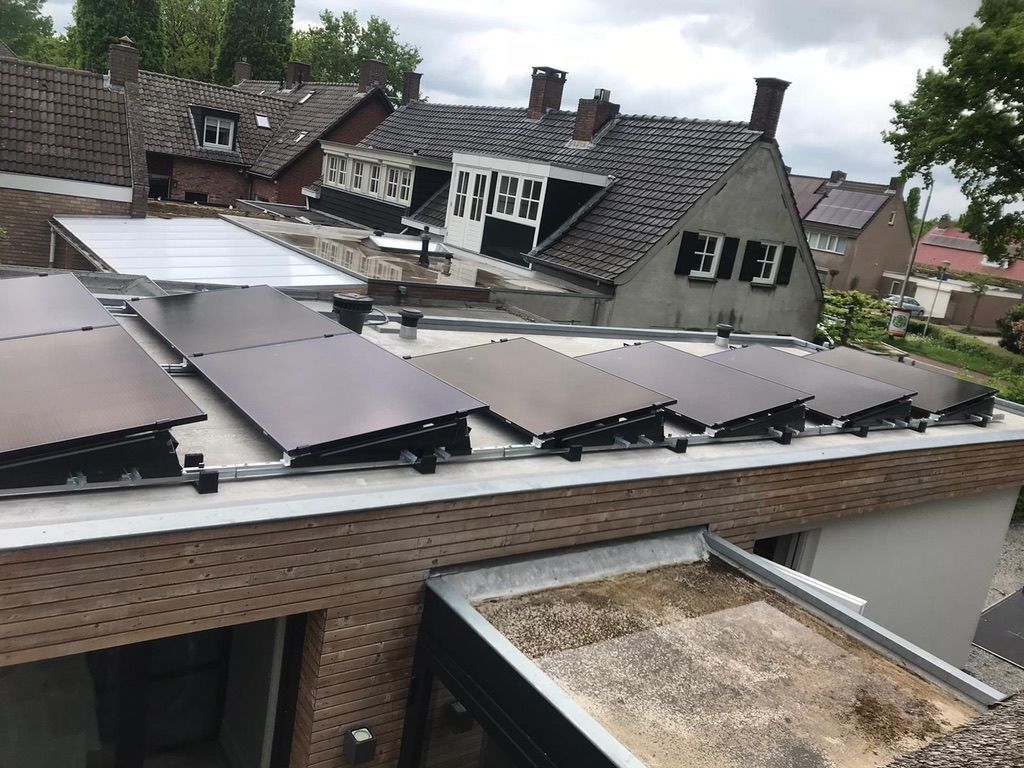
Connecting the solar system to the inverter or meter box requires AC and/or DC cabling. These often need to pass over the roof edge, which some homeowners find unattractive.
To solve this, we offer a roof grommet solution: cables pass directly through the roof into your home—often into a garage sub-panel or directly into the main fuse box. We’ll take care of everything.
Ballast Mounting Frame and Roof Edge Distance
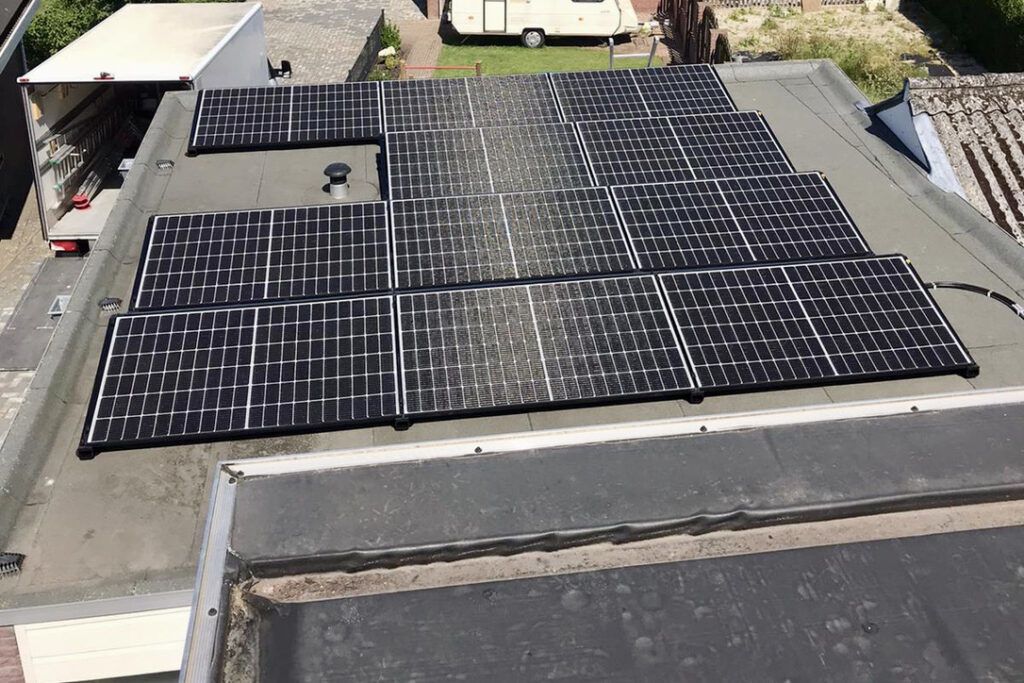
The solar panel mounting system ensures that the panels stay securely in place. The systems OptimaSolar uses are all tested and certified. We also make sure there is always sufficient ballast on the ballast trays of flat roof systems. This is calculated using the manufacturer’s software, which considers factors such as roof height, wind zone, surrounding buildings, and more. The software also takes the distance from the roof edge into account to ensure the frame maintains its structural integrity.
Dormer Windows and Solar Panels: Smart or Not?
Many modern homes have a dormer on the roof. If clients want to install panels on a dormer, it’s typically done using a flat roof mounting system. However, OptimaSolar advises against placing solar panels on existing dormers unless a structural assessment has been carried out by the manufacturer. This is because the combined weight of the flat roof mounting system and panels can be significant. Additionally, most dormers are small, typically allowing for only one or two panels. When more panels are installed in a row, they help support each other structurally, increasing safety. At OptimaSolar, safety and quality always come first.
Green Roofs and Flat Roof Solar Panel Installation
A green (sedum) roof can actually boost the performance of solar panels compared to a standard flat roof. This is due to the lower surface temperature of the vegetation, which improves solar panel efficiency. So, a green roof provides even more reasons to go solar.
However, the total weight must be carefully considered. The plants add weight, and so does the mounting frame for the solar panels. Additionally, the reflective properties of a green roof can be harnessed by using bifacial solar panels, which can generate power from both the front and back—resulting in even higher yields.
Want a quote for a flat roof solar installation? Fill in your details and we’ll contact you shortly with a personalized offer.
Free, non-binding quote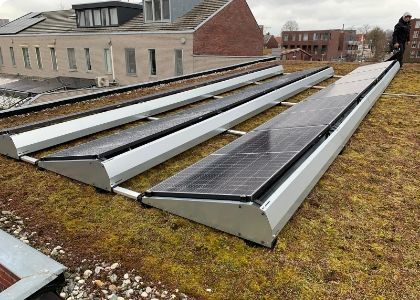
Customer Reviews

We are very happy with our solar installation from OptimaSolar. Wim took the time to meet us at our house to give us advice and estimations. The work was carried out very neat and tidy and Wim himself... [ lees meer ]
- Slabbert Family

Perfect
- Kichu xdeee

Great job! Thank you!
- Daniel Stanciu
Curious about our recent cases?


Schedule a free consultation
With over 7 years of experience and more than 4,000 successful installations, OptimaSolar is a trusted and experienced partner. We make solar energy affordable for every household and business.