

Inverters
Want to get the most out of your solar panels? Then it’s important that your APsystems monitoring is working properly. This allows you to keep track of your solar energy production and quickly detect any issues….
Lately, more and more solar panel owners are considering switching off their inverter — often to avoid feed-in charges. But is that actually safe for your system? The answer depends on how you turn it off.
Manually switching off your inverter via the circuit breaker in your fuse box is strongly discouraged — especially if you have a central (string) inverter. If you turn off the inverter while it’s actively converting power, it experiences a heavy electrical load disruption. Doing this repeatedly can damage the inverter, potentially rendering it useless. That means: no more solar power.
The residual-current device (RCD) in your fuse box is designed strictly for safety. It should only trip in case of a fault. If you want to turn off your solar panels, it’s much safer to do it on the DC side.
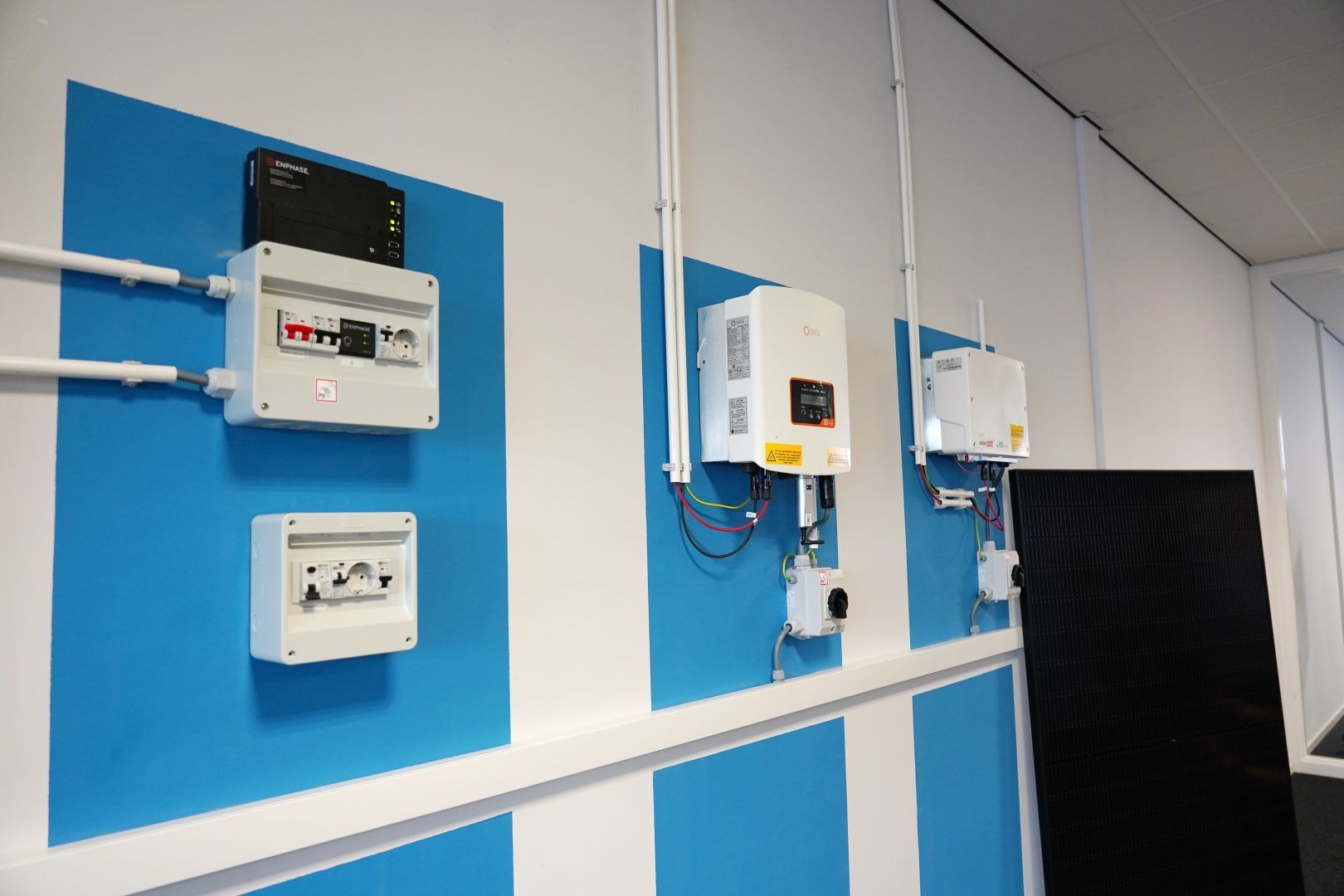
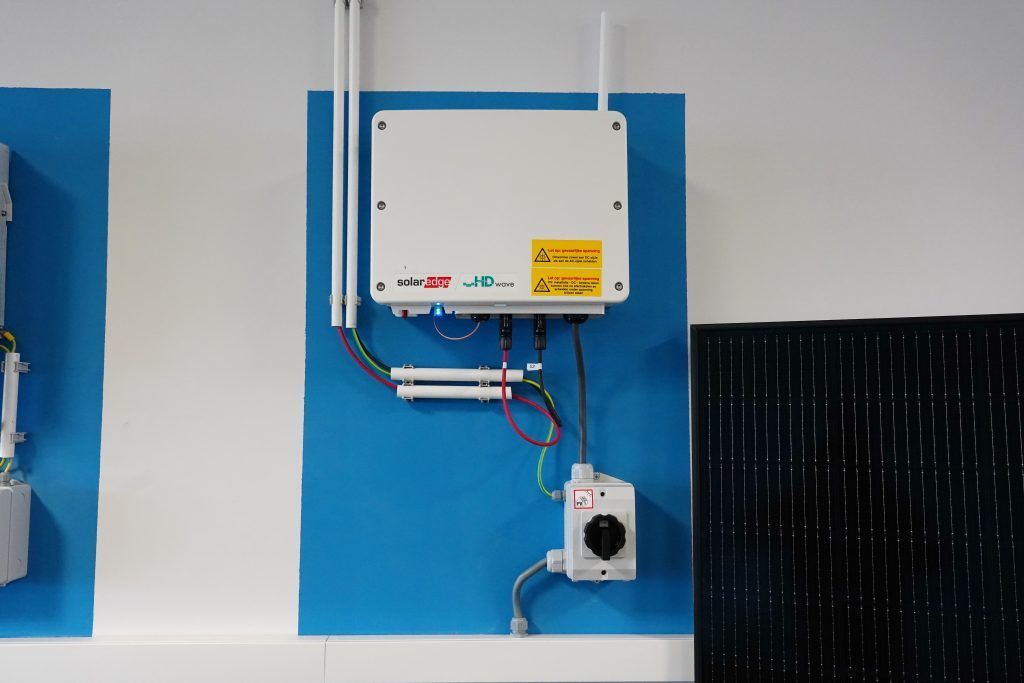
To safely turn off your inverter, it’s important to allow it to gradually reduce power production. If you have a SolarEdge inverter with optimizers, simply set the switch underneath the inverter to “0” — this safely shuts down the DC side. To turn it back on, set the switch to “1” again.
If you use a string inverter without optimizers, you can turn it off using the button underneath the unit — but be aware, even this can cause stress to the system. That’s why we generally advise against turning string inverters off too often.
With micro-inverters, such as those from Enphase, you should turn off the solar circuit breaker in the fuse box. But don’t forget: many modern systems (SolarEdge, Enphase, APsystems) can now be controlled remotely via their monitoring platforms.
Feed-in charges are a hot topic — and often the reason homeowners want to shut off their solar panels. However, the Dutch salderingsregeling (net metering scheme) remains in effect until 2027. This allows you to offset the solar energy you return to the grid against the energy you consume at other times (like evenings and winters).
So before turning anything off, be sure to carefully weigh your feed-in charges against your grid usage costs.
Don’t want to return any power to the grid? Some manufacturers now offer smart software that limits or prevents feed-in. If that’s not an option, consider investing in a home battery, air conditioning, an electric car, or a boiler — all of which can absorb excess solar energy.
However, keep in mind: these appliances must be able to handle the peak output of your solar panels. Otherwise, some of that energy will still end up being fed into the grid.
Want to get the most out of your solar panels? Then it’s important that your APsystems monitoring is working properly. This allows you to keep track of your solar energy production and quickly detect any issues….
Want to get the most out of your solar panels? Then it is important that your SolarEdge monitoring is working properly. This allows you to see exactly how much electricity your system is producing and quickly…