

Home battery
While solar panels have already been subject to a 0% VAT rate for several years, a home battery is still taxed at 21% VAT. However, in some cases, this VAT can be reclaimed through the Dutch…
There’s a lot of buzz these days about home batteries — but what should you really believe? New claims seem to pop up every week. Read on to find out whether they’re facts or fables!
FABLE! OptimaSolar offers a home battery that is also suitable for households without solar panels: the Sessy home battery. These households can charge the battery using dynamic energy tariffs or even trade on the imbalance market!
FABLE! While the price of home batteries has dropped in recent years, they’re still a significant investment. Growing interest in energy storage has led more companies to invest in this market, driving competition and bringing prices down. According to the Nationaal Solar Trendrapport 2024 by Dutch New Energy Research (DNE Research), home battery prices have decreased by 82% over the past decade.
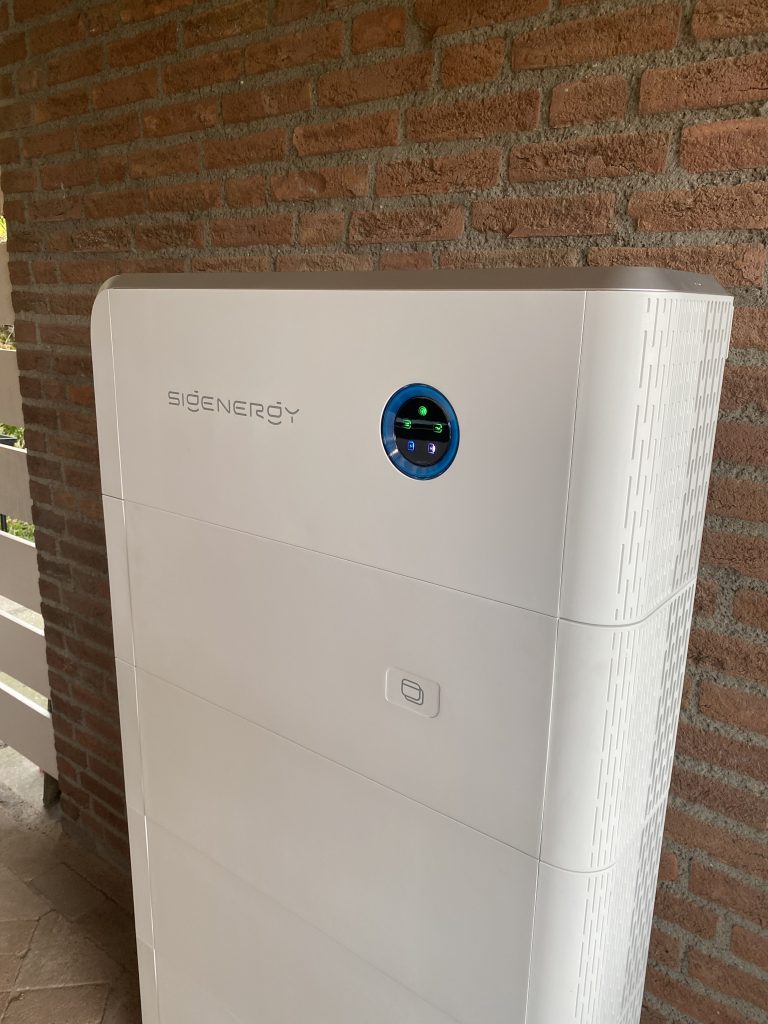
FACT! Home batteries can generally be installed either indoors or outdoors, but it’s not advisable to place them in direct sunlight. Since the battery needs to dissipate heat, a shed is often an ideal location — as long as it’s well-ventilated and doesn’t experience extreme freezing. Other suitable locations include the garage or attic.
FABLE! More storage isn’t always better. A commonly used rule of thumb is 1 to 1.5 kWh of battery storage per kilowatt peak (kWp) of solar power. What really matters is that you’re able to fully discharge the battery after sunset or during low solar production. An oversized battery that you can’t empty won’t make efficient use of your generated energy. Most storage systems are modular and expandable — so if you’re unsure, it’s smart to start smaller and expand later.
FACT! Modern home batteries are quite sophisticated. They can be configured for various modes — such as increasing self-consumption, charging at dynamic rates, trading on the imbalance market, or providing backup during outages. Thanks to regular software updates, these systems continue to improve, allowing users to benefit from the latest advancements.
While solar panels have already been subject to a 0% VAT rate for several years, a home battery is still taxed at 21% VAT. However, in some cases, this VAT can be reclaimed through the Dutch…
The electricity grid in the Netherlands is increasingly under pressure. In some regions, the grid is even so congested that new connections are no longer possible. As a result, Enexis is asking households to temporarily curtail…