

Home battery
While solar panels have already been subject to a 0% VAT rate for several years, a home battery is still taxed at 21% VAT. However, in some cases, this VAT can be reclaimed through the Dutch…
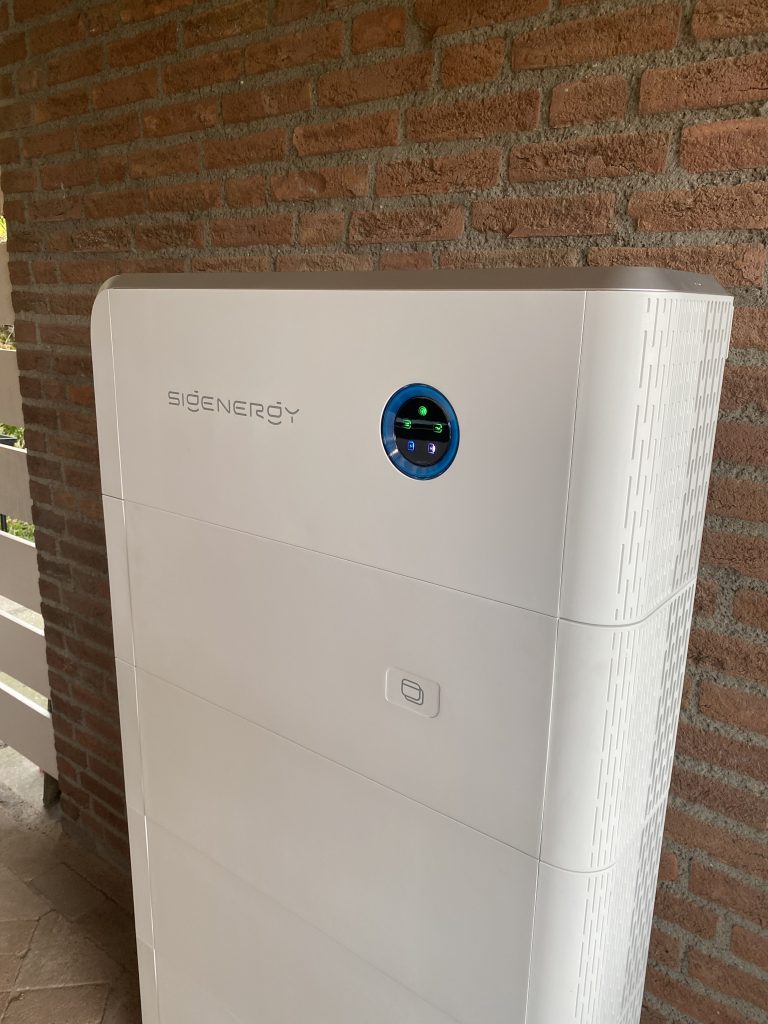
Home batteries, like solar panels, come in many shapes and sizes. We’ve already covered the difference between AC- and DC-coupled batteries, but there’s another important distinction: high-voltage vs. low-voltage batteries. Here, we’ll explain the key differences.
High-voltage batteries typically operate between 200V and 800V and are ideal for households with higher energy demands. These batteries charge and discharge more quickly, making them well-suited for dynamic energy usage. Another benefit: the inverter and battery don’t need to be installed close together. For example, the inverter can be in the attic while the battery is in the garage.
Low-voltage batteries, typically around 48V, are suitable for homes with more modest energy needs. They charge and discharge more slowly, which can be advantageous for off-grid applications. However, a key requirement is that the battery must be placed near the inverter.
OptimaSolar offers high-voltage batteries from SolarEdge, AlphaESS, and BYD. Dyness and BYD batteries come in various capacities, offering flexibility for different households. For low-voltage options, we work with brands including Enphase, APsytems, Sessy, AlphaESS, BYD, and SolarEdge.
Thinking about purchasing a battery but don’t want to dip into your savings? Good news: the Dutch government believes everyone should have the opportunity to make their home more sustainable. That’s why the National Heat Fund (Nationaal Warmtefonds) was established in 2013—to help finance home sustainability upgrades. The fund offers loans with fixed interest rates for the entire loan period. Currently, households with a collective income below €60,000 per year may even qualify for a 0% interest rate.
Interested in a home battery? Fill in your details, and we’ll be in touch shortly!
While solar panels have already been subject to a 0% VAT rate for several years, a home battery is still taxed at 21% VAT. However, in some cases, this VAT can be reclaimed through the Dutch…
The electricity grid in the Netherlands is increasingly under pressure. In some regions, the grid is even so congested that new connections are no longer possible. As a result, Enexis is asking households to temporarily curtail…